Separated biomass residues are a source of green power needed for H2 generation and H2 liquefaction. Moreover, small-scale cryo-cooling systems based on Stirling and thermoacoustic refrigeration cycles are emerging. Our long-term vision is for hydrogen production using a biomass-to-hydrogen process that has been optimized for cryogenic liquefaction at small to medium scale for dispersed H2 fueling stations. However, initial markets will likely use hydrogen gas compressed to high pressure for distribution in composite cylinders used for demonstration fleets. The key factor in going to a hydrogen fuel cell “is a fleet’s need for availability of the vehicle for multi-shift, multi-route operations.” Initially, the H2 transportation market will be limited to small demonstrations fleets, i.e., the fuel cell modules provided by Toyota for Kenworth to build two dozen Class 8 zero emission trucks for the Ports of Los Angeles and the Port of Long Beach. Green hydrogen is presently selling in the range of $7-12/kg H2 in modest quantities for transportation uses. Following further research and development, a biomass-to-H2 plant with 10,000 kg/day H2 capacity is planned for commercial development to supply transportation needs. Multiple biomass-to-hydrogen plants are envisioned that convert a continuous supply of low-value biomass residues into carbon negative hydrogen. For example, 40% of H2 sold for transportation use in California must be renewable H2.
Surprisingly, worldwide there are no modular scale systems that convert low-cost biomass residues into high-value hydrogen. The solution we are proposing will enhance the conversion of biomass residues into syngas (H2+CO) by applying acoustic power to intensify a low-pressure entrained flow gasification process. The fundamental science and engineering to create pulse detonation derived acoustic power in the 30 Hz range has been developed for other industries, but never applied to biomass gasification. This innovation will impact people worldwide by enabling the economic conversion of billions of tons per year of biomass residues into carbon-negative hydrogen and other high-value products. Biomass gasification is a mature technology involving heat, steam, and oxygen to convert biomass into hydrogen and other products. Since growing biomass removes carbon dioxide from the atmosphere, the net carbon emissions are low. When coupled with sequestration of carbon co-products the LCAs reach into negative territory.
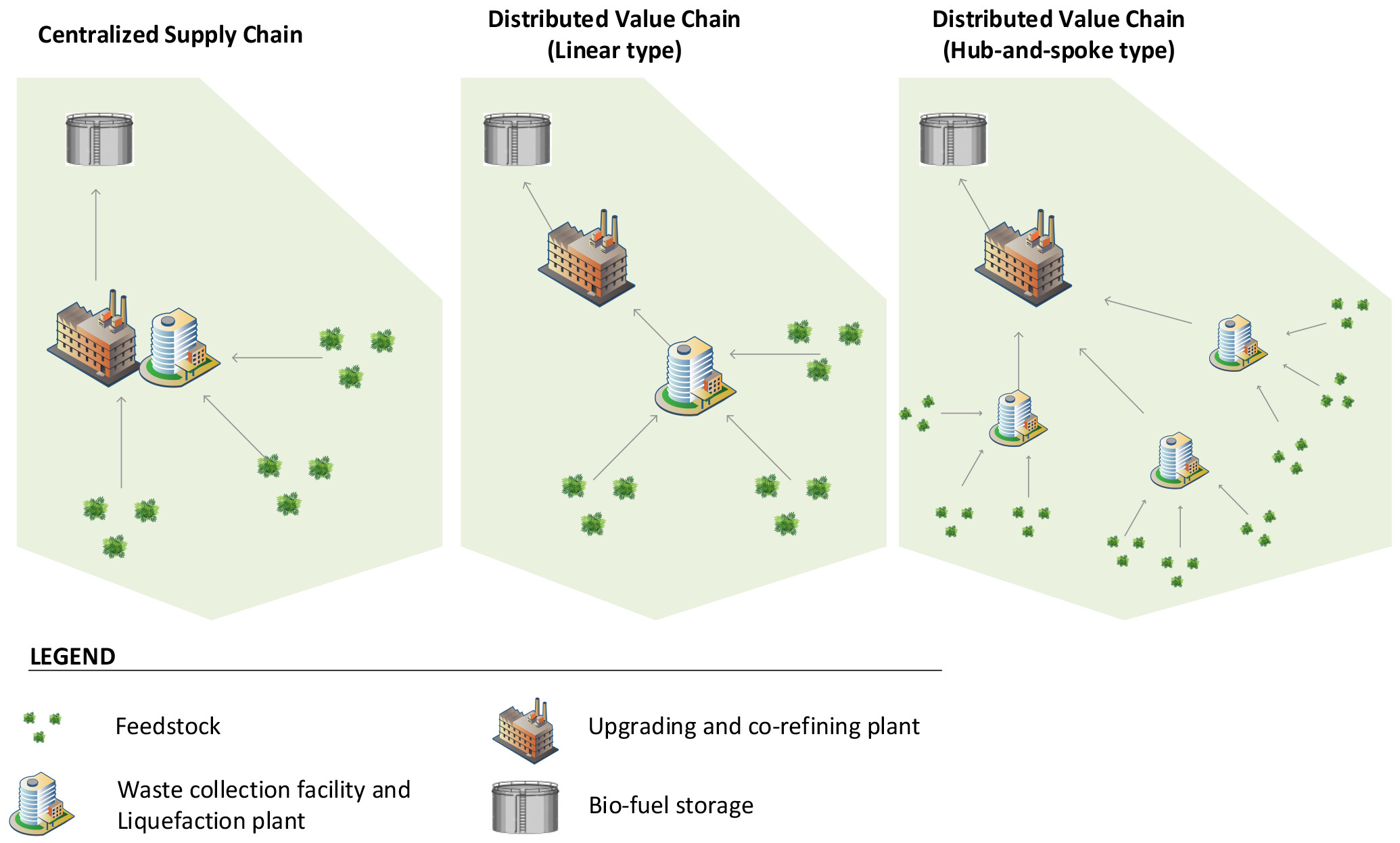
This is an example of a “hub-and-spoke” distribution system for biomass pyrolysis to produce bioliquids, (which is a combination of bio-oils with carbon char) that are then utilized in a gasification process to produce syngas for purposes like making hydrogen and carbon dioxide, or sustainable aviation fuel (SAF).
The “Spoke and Hub” is a comprehensive approach to sustainable energy production. Here’s how it works:
1. Biomass Collection (Spokes): Biomass wastes, such as agricultural wastes, forestry residues, or dedicated energy crops, are collected from various sources. This step occurs at the “spokes” or decentralized locations, where waste biomass resources are abundant.
2. Fast Pyrolysis (Spokes): Biomass undergoes fast pyrolysis, a rapid heating process to convert it into bio-oil, biochar, and syngas. Bio-oil is combined with micronized carbon to form a stable bio-liquid that is storable, transportable, and can be pumped to high pressure for further processing. Biogas is used for on-site heat and power requirements to produce transportable bioliquids.
3. Bio-Liquid Transportation (Spoke): Bioliquids produced at different fast pyrolysis plants (Spokes) are transported to a central processing plant hub. This hub serves as a distribution center for the bio-liquid.
4. Gasification (Hub): At the hub, bioliquids are pumped to high-pressure and fed into gasifiers. Gasification converts the bioliquids into syngas, a mixture composed of hydrogen (H2) and carbon monoxide (CO), along with other gases like methane (CH4) and carbon dioxide (CO2).
5. Syngas Utilization (Hub): The syngas produced from the gasification process can be utilized in several ways:
— Hydrogen Production: Syngas can undergo further processing, such as a water-gas shift reaction, to react carbon monoxide with water to make more hydrogen.
— Carbon Dioxide Capture: After the water-gas-shift, CO2 can be captured from the syngas stream and stored, reducing greenhouse gas (GHG) emissions.
— Sustainable Aviation Fuel (SAF) Production: By further refining the syngas, hydrocarbons suitable for use as aviation fuel can be synthesized through processes including Fischer-Tropsch synthesis.
6. Distribution of Products (Hub): The hydrogen, carbon dioxide, and SAF produced at the hub can then be distributed to various end-users, including industries, transportation sectors, and aviation.
Benefits of this hub-and-spoke distribution system include centralized processing for efficiency, optimized resource utilization, and the potential for scaling up production based on demand. Additionally, it supports the circular economy by converting biomass waste into valuable energy products while reducing greenhouse gas emissions.
The research team will evaluate multiple potential deployment paths that would use the innovation to improve different types of process outcomes. The graphic above summarizes carbon negative energy feedstock targets (1, 2, 3, 4) and the carbon negative processing paths that lead to key energy applications (9, 10, 11, 12, 13, 14) through use of low-pressure thermo-catalytic conversion methods (6, 7, 8).
Our research focus will accomplish proof-of-concept for path #6, to achieve low-pressure biomass conversion to make syngas composed of CO, H2, CO2, and other low molecular weight gases. Developing path #6 also helps advance paths as well. For example, #7, #10, & #14 is an optimum path that leads to high-pressure syngas enabling higher value products. Note the color-code below indicates technical readiness; dark green is commercially ready, whereas red requires more R&D.
Our research team will focus on fundamental aspects required to accomplish Path #6, low-pressure thermal conversion of biomass into syngas, which needs a simple cost-effective feeder to input biomass against <2-atmospheres of back-pressure that exhibits a novel kicking action: the pressure is measured as high/low fluctuations having kinetic energy (mv2) and momentum (mv), both generated as acoustic power at 30 Hz.
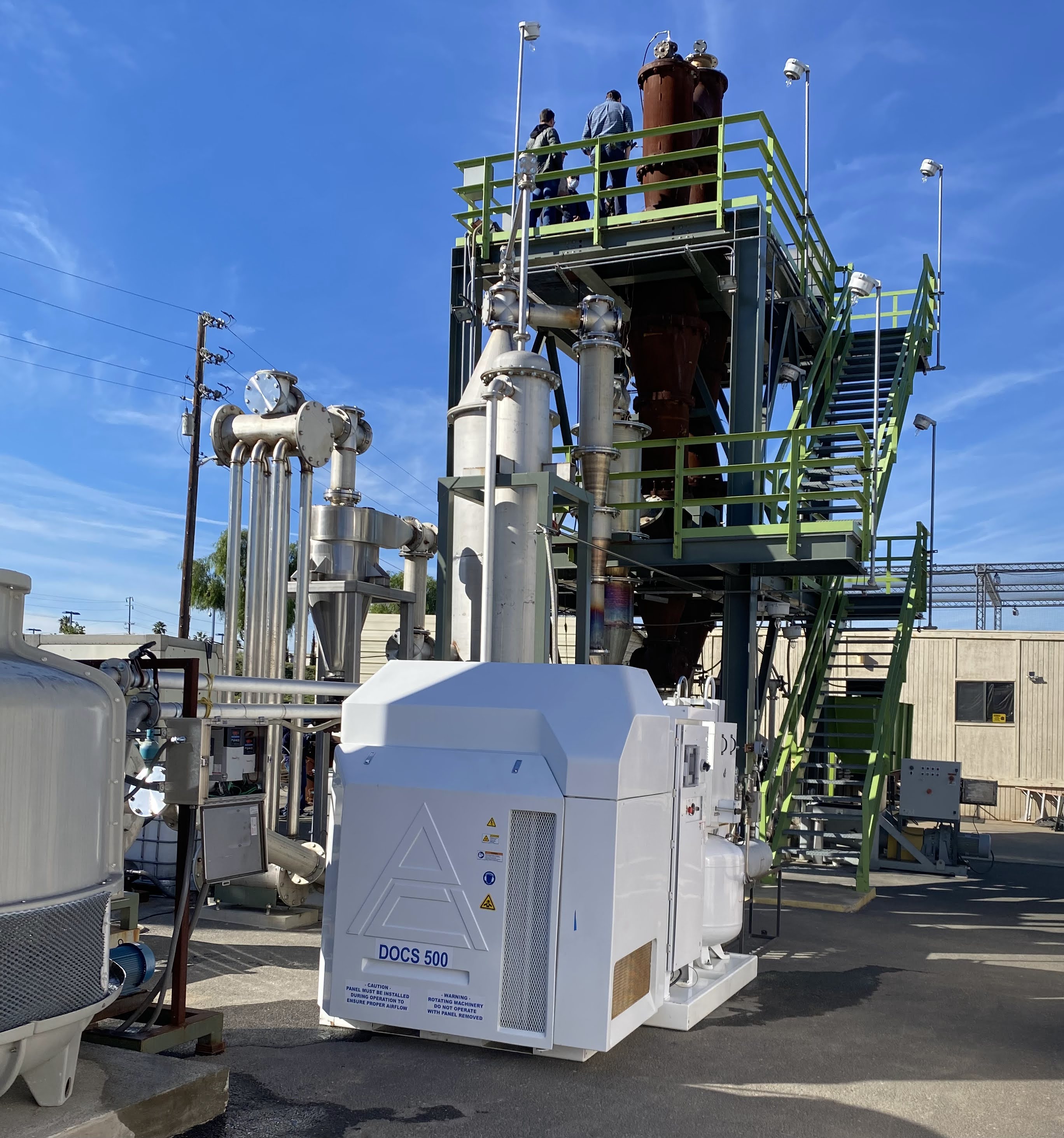
PCI, based in Riverside, California, manufactures a full line of PSA oxygen generators. We tested one of PCI’s small modular plants that supplied 93% O2 for thermoacoustic power generation that is used to intensify our proprietary autothermal gasification process.
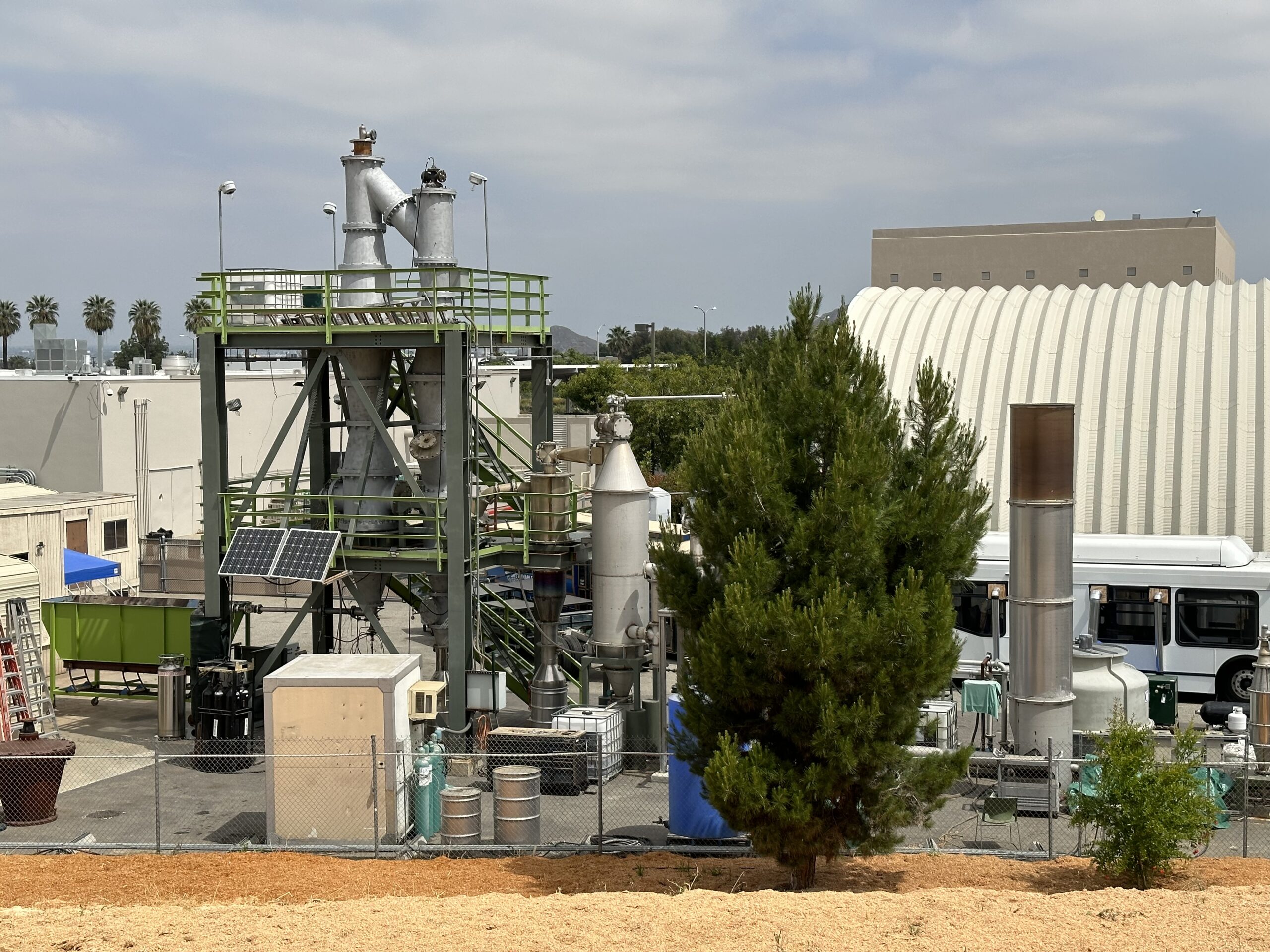
Using autothermal gasification methods, we successfully converted forest biomass into low-molecular-weight fuel gases. The fuel gases are used to power a 350-kW engine/generator modified for operation with medium-BTU gases.
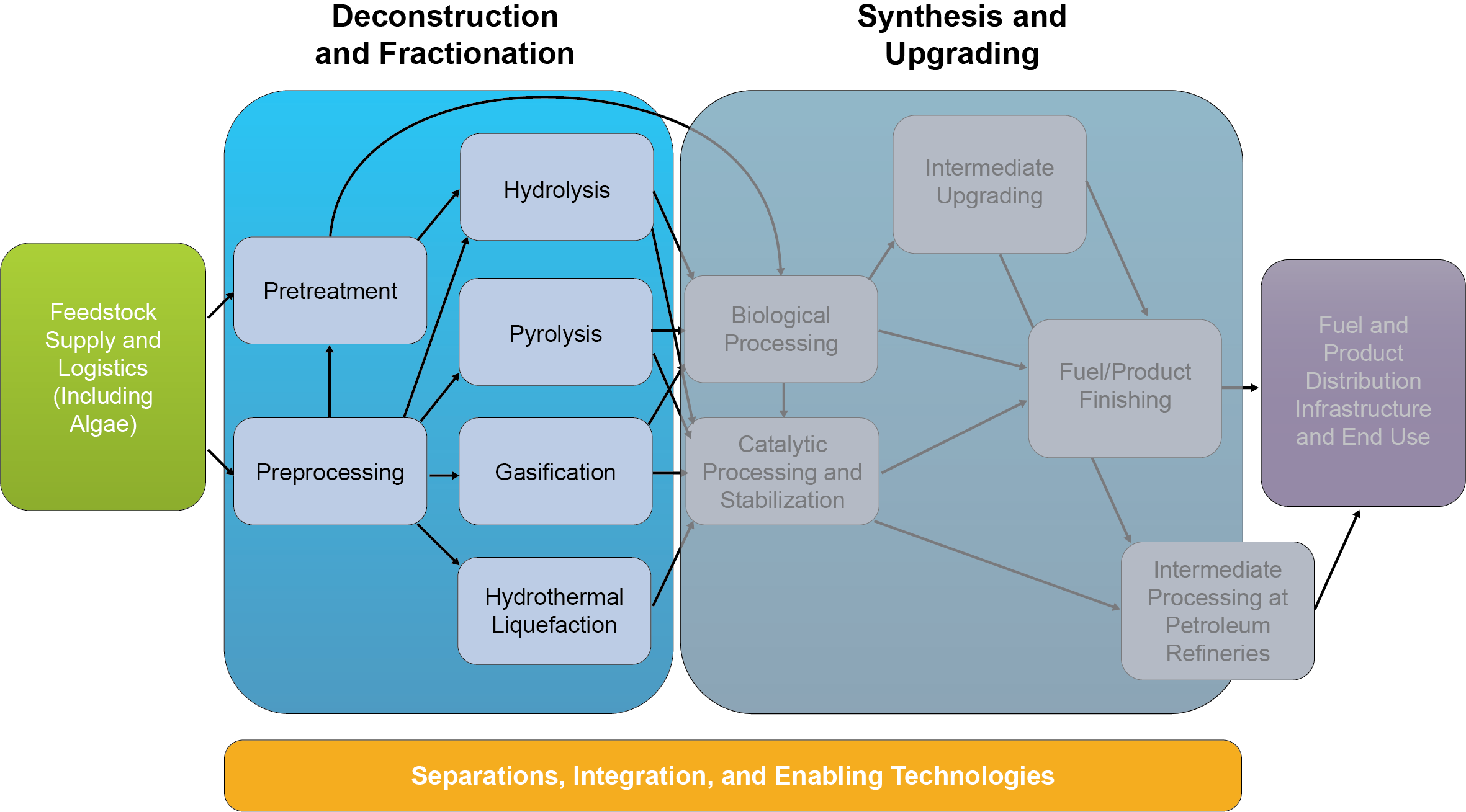
To convert biomass into a biofuel, it must first be deconstructed into its component chemicals. One can generally differentiate between deconstruction processes by the temperature at which they take place. A variety of intermediates can be formed depending on the conditions used in this process.
After preprocessing and/or pretreatment, deconstruction processes can be divided into two categories: (1) high-temperature deconstruction and (2) low-temperature deconstruction.
High-Temperature Deconstruction refers to processes performed at or above 200°C and includes deconstruction processes such as pyrolysis, hydrothermal and solvent liquefaction, and gasification.
Low-Temperature Deconstruction refers to processes performed below 200°C and includes deconstruction processes such as enzymatic and acid hydrolysis. (Bioenergy Technologies Office)